
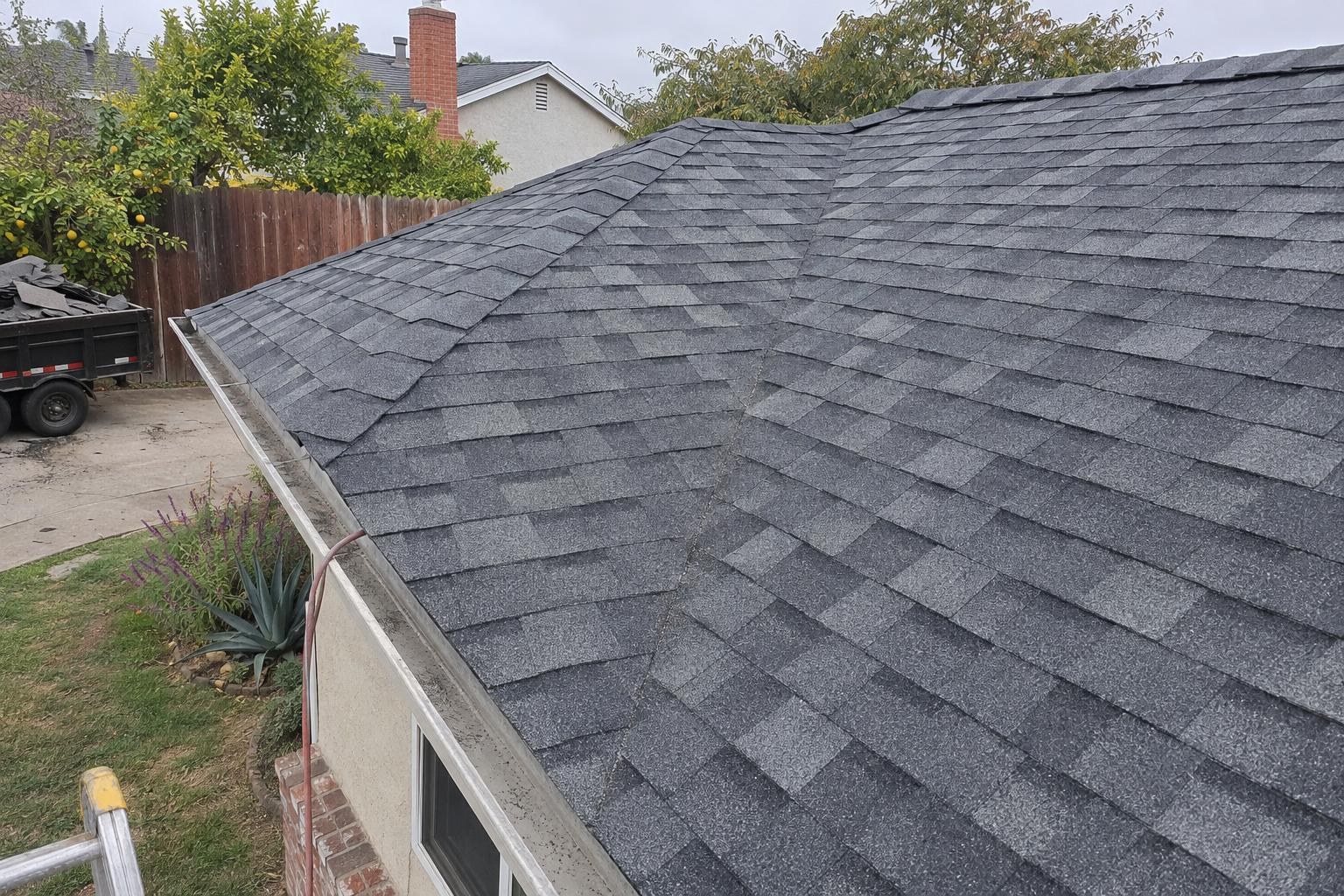
Rialto gets hot enough in July and August that cheap three-tab asphalt shingles will blister and curl, and dry enough most of the year that a bad flashing detail can sit undetected for a year or two before it finally shows up as a water stain on a bedroom ceiling. Then October and November bring the Santa Ana winds funneling through the Cajon Pass, and that's when a roof that was already marginal gets found out. Picking a roofing contractor here isn't about who has the nicest truck wrap. It's about whether the work holds up through a full year of this climate, and whether they're still around when something you couldn't see from the ground goes wrong.
Start with the license, not the pitch
Every roofer working in California needs a C-39 contractor's license from the CSLB, and you can look up that number yourself in under a minute on the state's website. Check that it's active, check that it's actually classified for roofing and not just general building, and check the bond and worker's comp coverage while you're at it. A roofer without comp insurance is a problem the day somebody falls off your ridge, not a line item you saved money on.
Ask who's actually going to be on your roof. Some companies sell the job and hand it off to a sub-crew you've never met. That's common and not automatically bad, but you want to know it's happening before a dumpster shows up in your driveway and strangers start pulling off your tile.
What a real bid actually spells out
A bid that says "re-roof, 2,000 square feet, $X" tells you almost nothing. A bid worth signing says whether it's a full tear-off or a layover, and under California code you're only allowed two layers of roofing before a full strip to the decking is required anyway. It names the decking material, usually half-inch CDX plywood on anything built since the 1970s, and it spells out what happens if the crew pulls the old layer and finds rot or delaminated sheathing underneath. That happens more on the older streets near Bloomington and downtown Rialto than it does in a 2005-built subdivision like Rosena Ranch, where the decking is newer and the original install usually met current code.
The bid should name the underlayment, synthetic or 30-pound felt, and the flashing material at valleys, chimneys, and skylights, plus whether they're installing step flashing or just running tar over whatever was there. Tar over old flashing is how a leak comes back two winters later looking exactly the same. If you're having a tile roof repaired instead of replaced, ask whether the new tile actually matches your existing profile. A lot of the Spanish S-tile used on roofs built here in the 1980s and 90s isn't manufactured anymore, so a contractor who knows the trade will flag that mismatch risk before the delivery truck shows up, not after.
Permits aren't optional, and they're not just paperwork
A re-roof in Rialto needs a permit through the city's building division, and if the property sits outside city limits, it goes through San Bernardino County instead. The inspection that follows checks the decking condition, the nailing pattern, and the flashing before anything gets covered over, which is exactly why a contractor who suggests skipping the permit should worry you. They're not saving you time. They're betting you won't need that paper trail later, when you sell the house or file an insurance claim after a windstorm tears off a section of shingles.
If you're in one of the newer developments with an HOA, there's often a review step for roof color and material before work starts. Worth asking about before materials arrive on site, not after they're sitting on a pallet in your driveway.
Red flags worth walking away from
- Someone knocking on your door right after a windstorm offering a "free inspection" and pushing you to sign that day. Storm chasers follow the Santa Ana wind events through the Inland Empire every fall, and the good ones are gone long before a warranty claim ever comes up.
- A quote dramatically lower than every other bid, with no explanation for the gap. Somebody's cutting a corner, and it's usually the decking replacement allowance or the underlayment grade.
- A request for more than a small deposit before any material is delivered. California law limits upfront deposits on home improvement contracts, and a roofer asking for half in cash before work starts is telling you something.
- No written warranty, or one that's verbal only. A workmanship warranty and a manufacturer's material warranty are two different documents. You want both in writing, with the manufacturer's warranty tied to a specific product, not a vague promise of quality.
What the work actually looks like once it starts
A straightforward tear-off and re-roof on an average single-story Rialto house usually runs two to three days, assuming no rain, which is a safe bet most of the year outside of December through February. Flat and low-slope sections, common on additions and older ranch-style homes, need more care because the margin for error on drainage is smaller. A quarter-inch-per-foot slope mistake is the difference between water running off and water sitting in a puddle that eventually finds a seam.
Ventilation matters more here than most homeowners think, because an attic that can't breathe traps summer heat and bakes the underside of the decking from both sides at once. A roofer who asks about intake and exhaust venting, not just which shingle color you want, is thinking about the whole system instead of just the part visible from the curb. If you're not replacing the roof yet and just want to know where you stand, a proper inspection will tell you the decking condition, the remaining life on the shingles or tile, and whether the flashing at penetrations is doing its job, usually for a lot less than the cost of finding out the hard way after a storm.
None of this is complicated, but it's the kind of detail that separates a crew that's done this for real from one selling you a tarp over your problem. Roofcrest Roofing Company handles tear-offs, tile repair, flat roofs, and storm damage work across Rialto and the surrounding towns, and we're glad to walk through a bid line by line before you sign anything, ours or anyone else's.